
Some years feel like a sprint. Others feel like a blur.
2025 felt like a deep breath.
It was a year when people stopped chasing everything at once and started choosing what actually made life enjoyable. Technology didn’t disappear, but it softened. Entertainment didn’t shock, but it comforted. Trends weren’t about being first anymore. They were about feeling good.
Here’s how 2025 quietly became one of the most enjoyable years in recent memory.
Sustainability Went From Trend to Default
In 2025, sustainability stopped being a conversation starter and became part of everyday life.
People didn’t announce their eco friendly choices. They just made them. Reusable bags were expected. Secondhand clothing was stylish, not frugal. Repair shops and resale platforms thrived. Even luxury brands leaned into longevity instead of fast turnover.
What changed most was the tone. Sustainability no longer felt like a sacrifice. It felt practical.
People noticed benefits right away:
- Less clutter at home
- Better quality products
- Lower long term costs
Choosing greener options felt calmer, not restrictive. That shift made sustainability stick.
AI Became Everyday, Not Overwhelming
Artificial intelligence didn’t dominate headlines in 2025. It quietly moved into daily routines.
People used AI tools without drama. Writing help. Scheduling. Photo editing. Learning support. Even creative brainstorming. It wasn’t about replacing humans. It was about removing friction.
The biggest change was emotional. Fear faded. Curiosity replaced it.
AI stopped being something people argued about and became something they relied on lightly. Like a calculator. Or spell check. Useful. Invisible. Normal.
That’s when technology truly integrates.
Mental Health Took the Spotlight and Stayed There
2025 was emotionally honest.
Burnout was no longer a personal failure. It was a shared experience. Therapy apps became common. Conversations about rest, boundaries, and balance moved into workplaces, social circles, and media.
People learned to protect their energy.
That meant:
- Logging off earlier
- Saying no without explaining
- Choosing routines that supported rest
Mental health wasn’t treated like a trend. It was treated like maintenance. Something you check in on regularly, without shame.
Nostalgia Ruled Entertainment for a Reason
Entertainment in 2025 leaned heavily into familiarity.
Old shows returned. Movie reboots dominated streaming charts. Music sampled sounds people grew up with. Early 2000s fashion fully reclaimed the spotlight.
This wasn’t laziness. It was comfort.
In a world that moved fast, familiar stories felt grounding. Nostalgia became a safe place. A reminder of simpler times, or at least times that felt simpler.
And audiences loved it.
Home Became the Center of Life
Home life mattered more than ever in 2025.
People cooked again. Hosted small gatherings. Invested in warm lighting, comfortable furniture, and calming spaces. The idea of a perfect night shifted.
Instead of loud plans, people enjoyed:
- A good meal
- A favorite show
- A casual game
- A quiet drink
Home wasn’t a fallback. It was the destination.
Travel Slowed Down and Felt Better
Travel in 2025 wasn’t about speed or status.
People traveled less often, but more intentionally. Smaller towns gained popularity. Nature escapes replaced packed itineraries. Longer stays replaced rushed checklists.
Travel became about experience instead of proof.
People wanted to feel something, not just post something.
Digital Minimalism Found Its Moment
People didn’t quit technology in 2025. They edited it.
Notifications were muted. Screen free evenings became normal. Apps simplified their designs. Calm interfaces won over flashy ones.
Being online stopped feeling compulsory.
People reclaimed attention and used it where it mattered.
Audio Took Over Daily Life
Listening became the preferred way to consume content.
Podcasts expanded into every niche imaginable. Audiobooks surged. Ambient soundtracks played in homes, cafés, and offices.
Audio fit perfectly into slower routines. You could listen while walking, cooking, or resting.
It informed without overwhelming. Entertained without demanding.
Pop Culture Delivered Big, Fun Moments
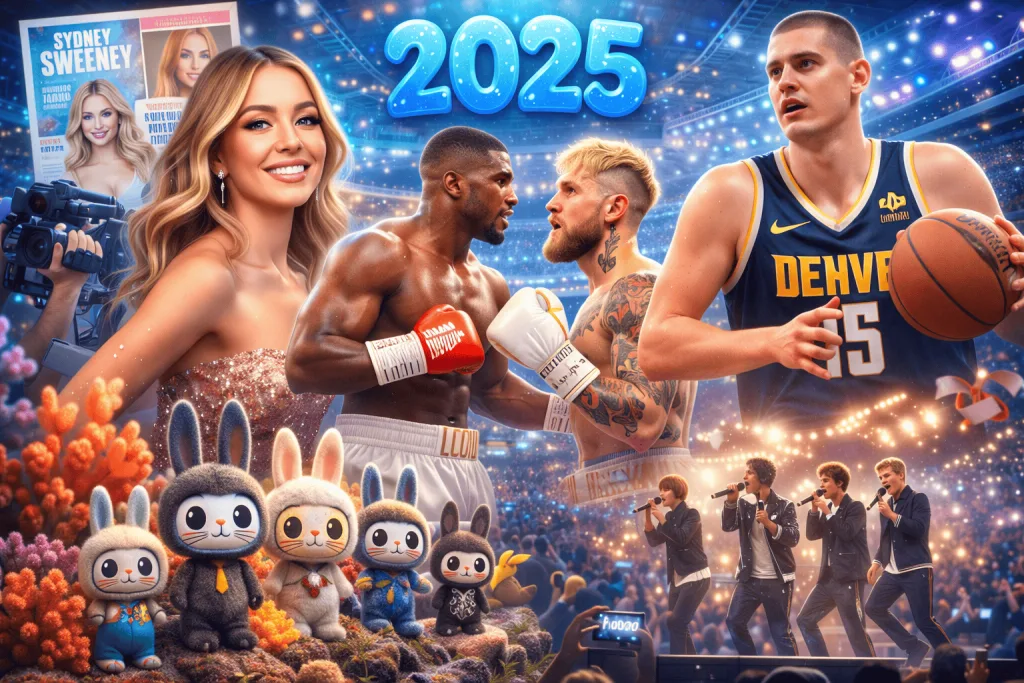
2025 still had its share of headline moments.
Sydney Sweeney truly took center stage. From fashion campaigns to film releases, she became one of the most recognizable faces of the year. Her rise felt confident, effortless, and everywhere.
Sports brought spectacle.
Anthony Joshua stepping into the ring with Jake Paul became one of the most talked about boxing events of the year. It blurred the line between sport and entertainment, and people couldn’t look away.
In basketball, Nikola Jokić continued rewriting NBA history. Triple doubles. MVP level performances. A style of play that made analysts rethink the game. Even after injury concerns, fans stayed hopeful. His impact went beyond stats.
Labubu trend skyrocketed at one point, and the dolls became the hottest selling item of the year.
Music also delivered. A surprise reunion tour from a legendary early 2000s band became one of the highest grossing live events of the year, proving nostalgia still sells out arenas.
Pop culture in 2025 felt lighter. Less outrage. More shared enjoyment.
Conclusion
It’s safe to say 2025 didn’t chase extremes. It blended progress with comfort. Innovation with familiarity. Technology with humanity.
People stopped asking what was trending and started asking what felt right. That shift made all the difference. The year ended not with chaos, but with balance. And that might be the best highlight of all.